Loyalty Cards That Live in Your Customers’ Wallets: A Beginner’s Guide for Local Businesses
9 min readTwohertz
A loyalty card should make it easier for customers to come back. But many traditional programmes create more work than value.
Plastic cards get lost. Paper punch cards get left at home. Mobile apps often ask customers to download, register, remember a password and allow notifications before they can earn a reward.
There is a simpler option: a loyalty card that lives in your customers’ Apple Wallet or Google Wallet.
For a café, restaurant, bar, gym, salon, studio or dive operator, wallet loyalty combines customer rewards with a direct way to stay in touch. It is one of the most practical small business software solutions for turning a one-time visit into a repeat relationship.
The idea is simple: software that wins customers, marketing that keeps them.
What is a wallet loyalty card?
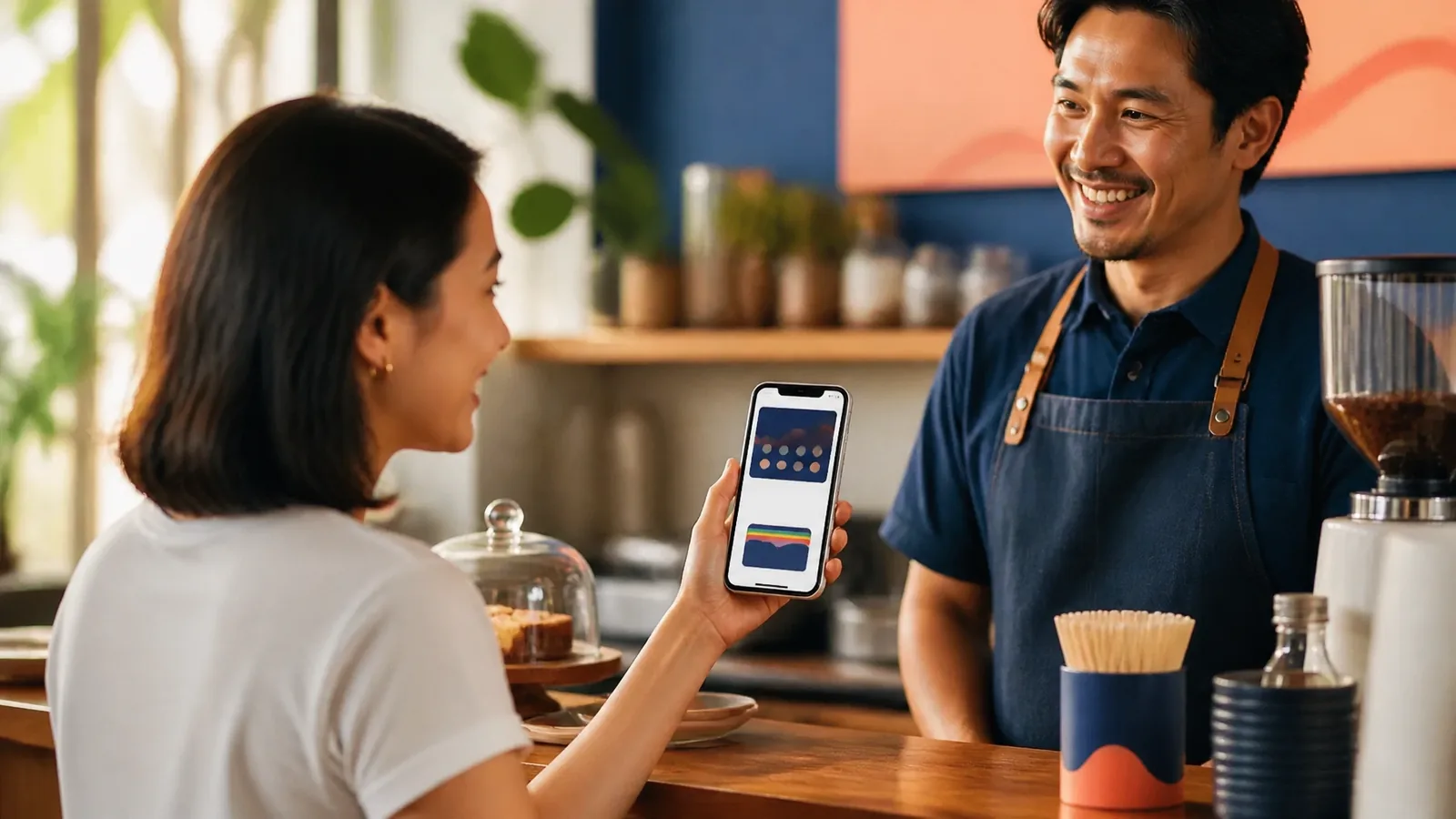
A wallet loyalty card is a digital membership, rewards or cashback card that customers save to their phone.
On an iPhone, it can live in Apple Wallet (opens in a new tab). On Android, it can live in Google Wallet (opens in a new tab).
The card might show:
- A customer’s points balance
- Visits or stamps earned
- Membership level
- A barcode or QR code to scan
- A current offer
- A reward waiting to be claimed
- A link to your website or booking page
Customers can add the card from a QR code, website, email, SMS message or your business system. Once it is saved, they do not need to search for it in their email or remember where they left it.
At checkout, they open the pass and show the code to staff. Depending on the setup and hardware, the card may also work through contactless technology.
For customers, it feels like a card. For the business, it is a small customer relationship system in their pocket.
How wallet loyalty works
A typical customer journey looks like this:
- A customer visits your business.
- Staff invite them to join your loyalty programme.
- The customer scans a QR code or taps a link.
- They add the loyalty card to Apple Wallet or Google Wallet.
- Their visit, purchase or membership activity is recorded.
- They receive points, cashback, stamps or another reward.
- The card is updated when they earn or redeem something.
- Your business can send relevant offers or reminders through the programme.
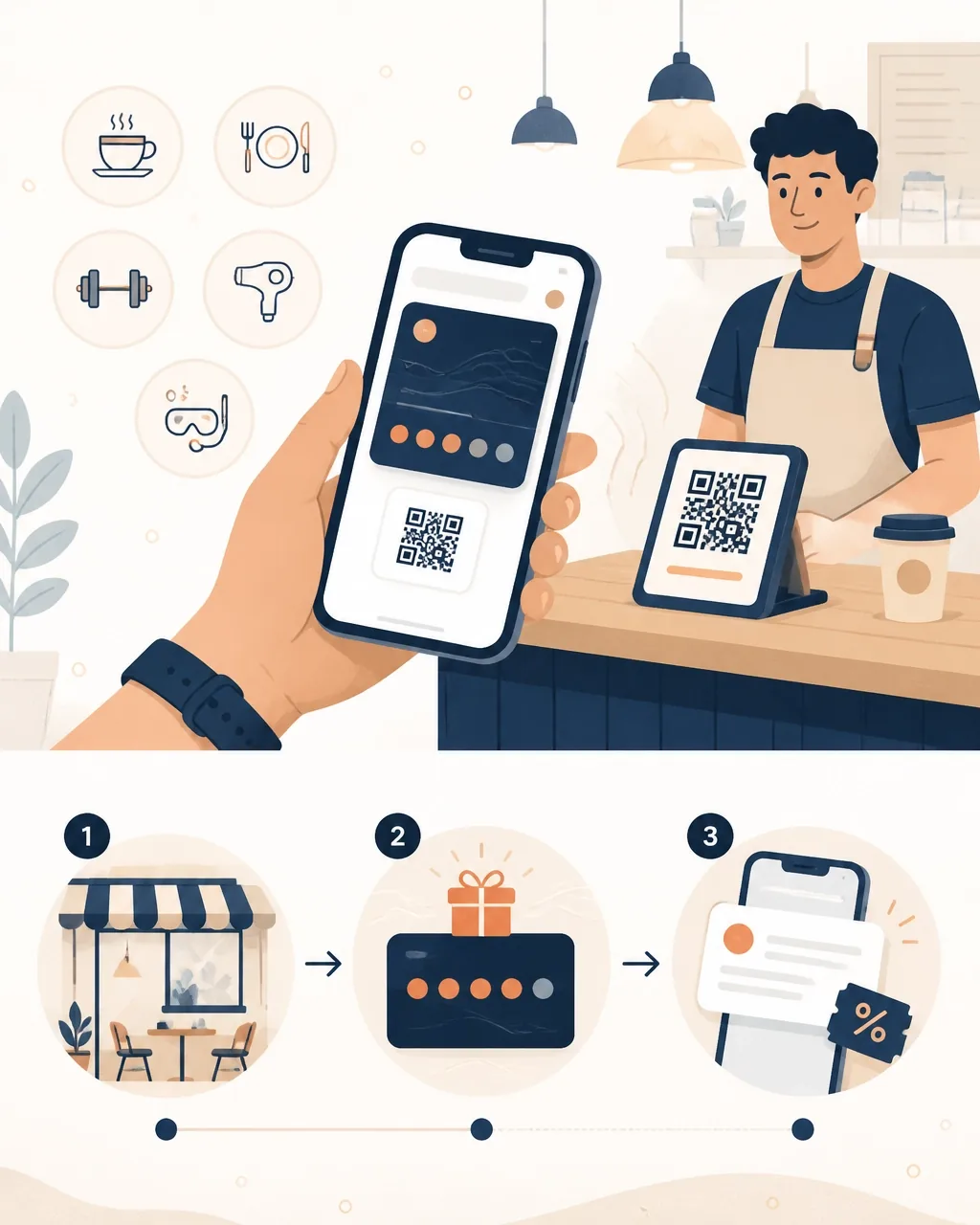
The important difference is that the relationship does not end when the transaction ends.
A normal purchase gives you revenue. A wallet loyalty programme can also give you permission to build a continuing relationship with the customer.
Why wallet loyalty beats a plastic punch card
Plastic and paper loyalty cards are familiar, but they have several weaknesses.
They are easy to lose
Customers carry many cards. A loyalty card that stays at home cannot help them earn or redeem rewards.
A wallet pass is already on the device most people carry every day.
They are difficult to update
If you change your offer, you need to print new cards or explain the changes at the counter. Digital passes can be updated without replacing the card.
You can change a points balance, add a seasonal reward or update a promotion inside the existing pass.
They provide little customer insight
A paper card may tell you that someone has earned nine stamps. It does not help you understand how often they visit, what they buy or whether they have stopped coming.
A connected digital system can help you measure participation and identify useful customer groups, while respecting your privacy and data responsibilities.
They do not create a follow-up channel
A punch card can reward a customer at their next visit, but it cannot easily remind them to return.
Wallet loyalty can support timely updates, such as:
- “You are one visit away from your reward.”
- “Your cashback balance is ready.”
- “Members receive a free drink this weekend.”
- “Your class membership renews next week.”
- “A quiet afternoon offer is available today.”
The message should be useful, not constant. Good loyalty marketing gives customers a reason to return without becoming noise.
Why a loyalty app is not always the best answer
A dedicated mobile app can be valuable for a large business. But for many small businesses, it is more technology than they need.
An app requires downloads, updates, storage space and ongoing maintenance. Customers may not want another app for every café, gym or salon they visit.
A wallet card removes much of that friction. Customers can join quickly and use a familiar part of their phone.
This does not mean wallet loyalty replaces every app. A gym with class bookings, payments and member content may still benefit from a full app. But if your main goal is to reward visits and bring customers back, a wallet pass can be a more focused starting point.
That is where custom software development for small business can make a difference. Instead of forcing your business into a generic app, a tailored system can connect the parts you actually need: loyalty, offers, customer records, booking tools and marketing.
Apple Wallet and Google Wallet: what is the difference?
The basic experience is similar, but you should support both platforms if your customers use both iPhone and Android devices.
Apple Wallet
Apple describes Wallet passes as a way to keep loyalty cards, rewards cards, coupons and other passes in one place. Customers can add a pass from a website, app, QR code, email or message.
Apple Wallet passes may display points, balances, expiry dates and other details. With the right setup, they can also support location-based visibility and contactless experiences.
Read Apple’s official guide to loyalty cards and passes (opens in a new tab) or its developer information about loyalty and membership passes (opens in a new tab).
Google Wallet
Google Wallet supports digital loyalty and gift cards for Android users. Customers can save a card through your business’s “Save to Google Wallet” button, a link or supported Wallet flows.
They may also be able to add some cards by searching for a participating merchant or scanning a barcode, depending on the programme.
Google provides technical information about loyalty cards in Google Wallet (opens in a new tab), while customers can find practical instructions in Google Wallet Help (opens in a new tab).
The key lesson for a local business is straightforward: do not make customers think about which technology you use. Give them a clear choice to add the card to the wallet already on their phone.
What can local businesses use wallet loyalty for?
Wallet loyalty is flexible enough for many local business models.
Cafés and restaurants
Reward visits, spending or specific products. For example, customers might earn a free coffee after ten visits or receive a weekday cashback offer.
Bars and hospitality venues
Offer member-only events, cashback, birthday rewards or early access to promotions. A digital card can help turn occasional visitors into regulars.
Gyms and studios
Use a wallet pass as a membership card, class check-in tool or tiered rewards card. It can show membership status and important updates.
Salons and wellness businesses
Reward repeat bookings, referrals or package purchases. Send a reminder when a customer is due for their next appointment.
Dive operators and activity businesses
Offer returning-customer benefits, trip credits or referral rewards. A wallet card can remain useful even when customers visit only occasionally.
The reward does not always need to be a discount. Priority booking, a free upgrade, exclusive access or a small additional service may be more valuable while protecting your margins.
A simple way to launch your first programme
Start with one clear customer action and one clear reward.
For example:
“Join our digital loyalty card. Earn one point for every visit. Collect ten points and receive a free drink.”
Then follow these steps.
1. Choose the right reward
Make it easy for staff to explain and customers to understand. Avoid a complicated points table at the beginning.
2. Decide how customers earn
You might reward visits, spending, bookings, referrals or membership activity. Pick a method your team can record accurately.
3. Connect it to your daily workflow
Your loyalty system should fit your checkout, booking or membership process. If staff need to perform five extra steps for every customer, the programme will not last.
4. Create the wallet card
Use your loyalty platform or a custom system to add your branding, reward rules, QR code or barcode. The card should show the most important information first.
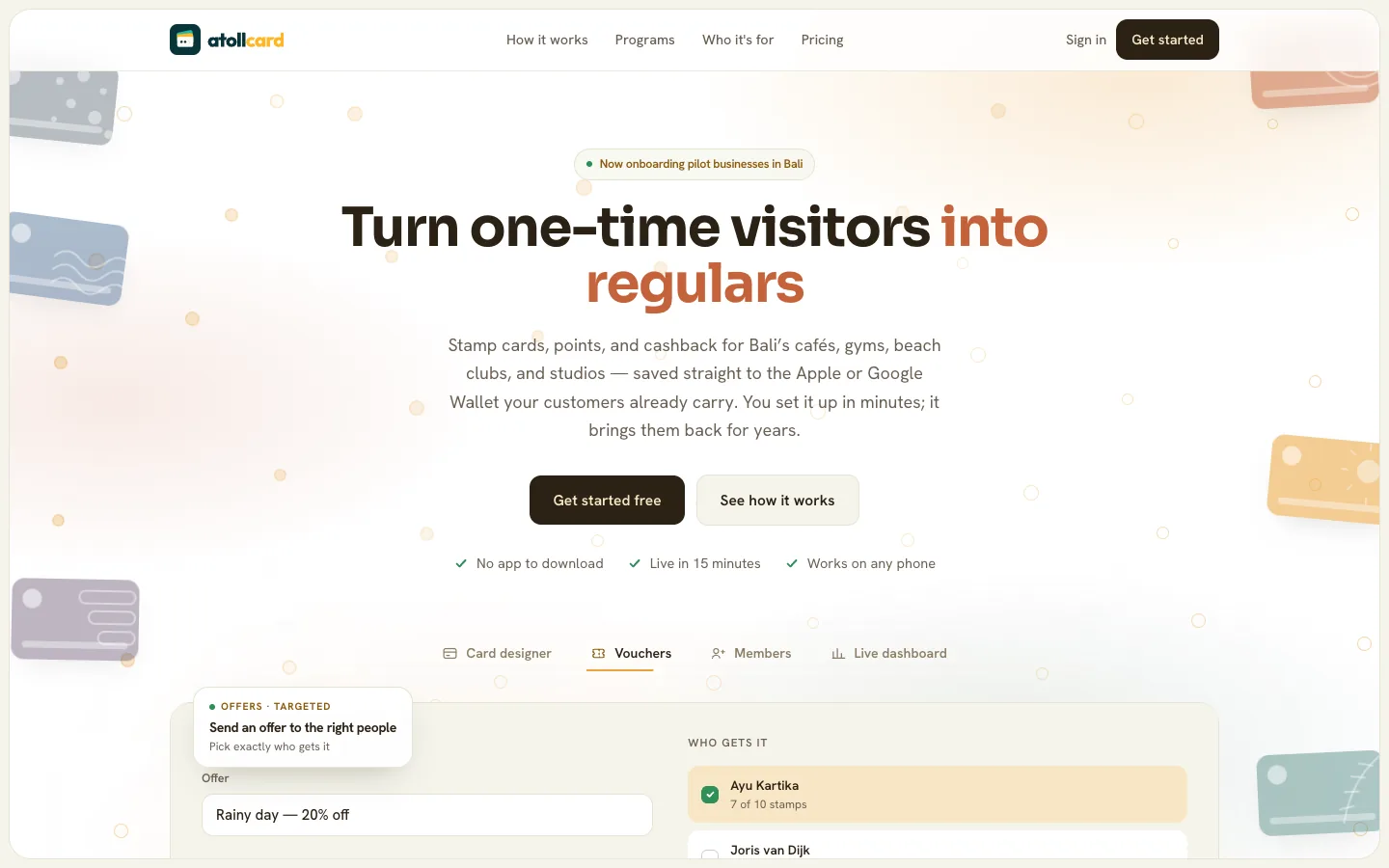
Atollcard is built around this wallet-loyalty approach: helping local businesses provide digital cards, rewards and targeted offers without requiring every customer to download a separate app.
5. Promote it at the right moment
The best time to offer loyalty is during a positive interaction:
- At checkout
- After a booking
- On a receipt
- In a welcome email
- On a table card or counter sign
- After a customer redeems a reward
Use a simple message such as:
“Would you like to save our rewards card to your phone?”
6. Measure and improve
Track practical measures:
- How many customers added the card?
- How many used it?
- How many returned?
- Which rewards were redeemed?
- Which offers created repeat visits?
- How much did the programme cost compared with the revenue it generated?
Do not start with too many reports. Focus on whether the programme helps customers return more often.
The real value: reaching customers again
The strongest benefit of wallet loyalty is not the digital card itself. It is the follow-up relationship.
A customer may enjoy your café, salon or gym but still forget to return. A helpful reminder can bring your business back into their consideration at the right time.
That is the difference between collecting points and building retention.
The best programmes combine three things:
- A reward customers genuinely value
- A simple experience at checkout
- Relevant communication after the visit
Wallet loyalty should never be an excuse to send endless promotions. It should help you understand what your customers value and give them a clear reason to choose you again.
For small businesses, that combination of software and marketing can be more useful than a complex technology stack.
Final thoughts
Loyalty cards in Apple Wallet and Google Wallet give local businesses a practical alternative to plastic punch cards and heavy mobile apps.
They are easy for customers to carry, easier for businesses to update and useful for building a direct relationship after the first visit.
Whether you run a café, restaurant, bar, gym, studio, salon or dive operation, start small. Choose one reward, make joining simple and connect the programme to the way your team already works.
The goal is not to add more technology. The goal is to help more customers return.
That is what good small business software solutions should do: win customers, keep them engaged and support the everyday work of the business.